
Revisiting the Act on Climate: When Good Intentions Meet New Reality
The 2021 Act on Climate was passed with good intentions, based on the best information available at the time. Four years later, we have better data, changed federal conditions, and a much clearer understanding of the real costs involved.
It would be responsible for the next General Assembly to review the targets, protect affordability, and ensure the path forward works for Rhode Island families.
Why am I saying this?
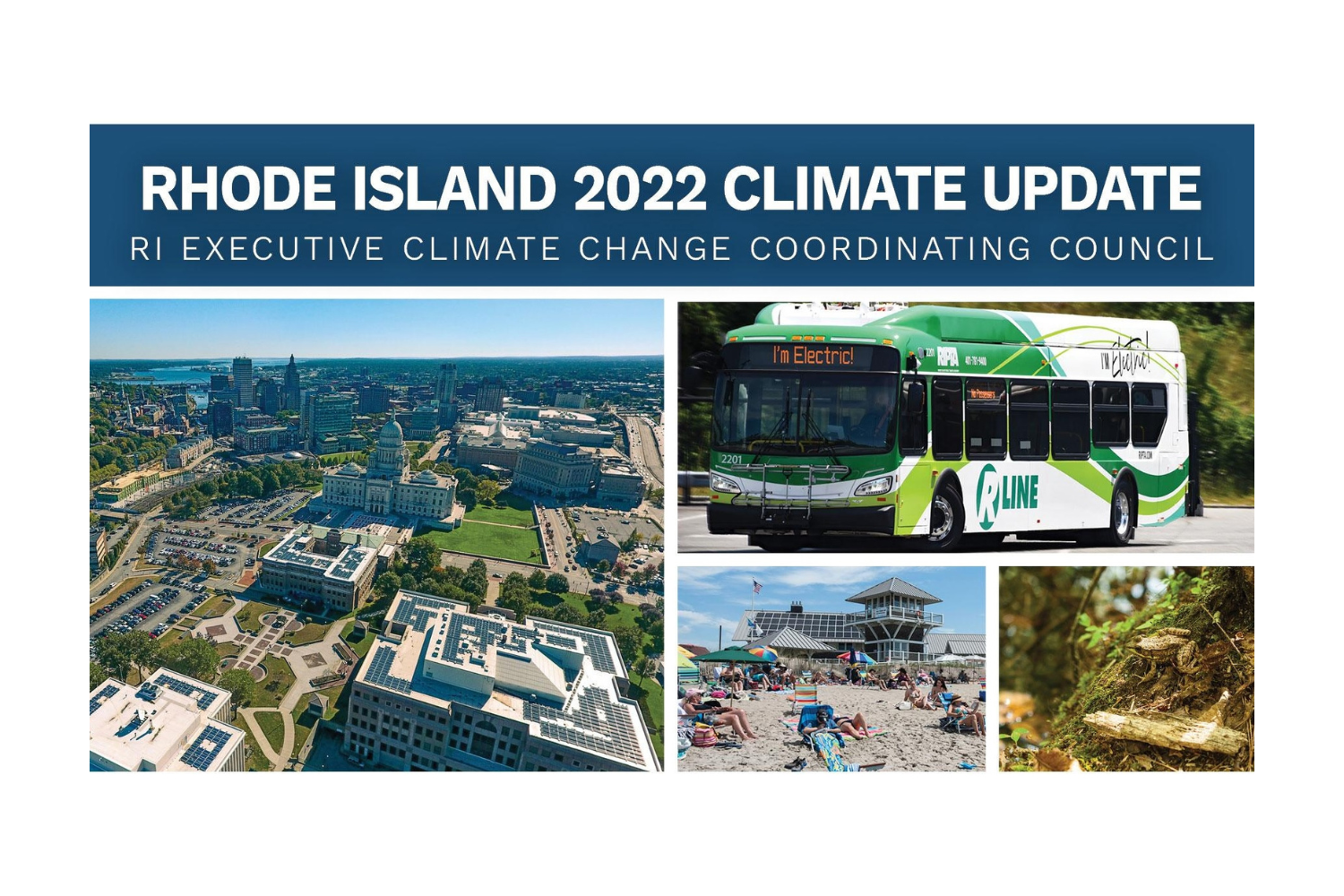
Today, I received an email from the Rhode Island Department of Environmental Management linking to the Final Draft of the Rhode Island 2025 Climate Action Strategy. The Executive Climate Change Coordinating Council (EC4) is holding a public meeting this week to update Rhode Islanders on the state’s plan to comply with the Act on Climate.
While the state is legally required to meet the targets set in 2021, the report makes clear that we are now facing significant and growing challenges in trying to meet those mandates.
To his credit, Terry Gray, Director of the Rhode Island Department of Environmental Management and Chair of EC4, does not paint a rosy picture. Instead, his introductory letter is an unusually frank acknowledgment from a state official that:
The goals are difficult
The assumptions behind them are uncertain
The path forward is not guaranteed
The legal obligation remains.
The report opens with a two-page letter from Director Gray that can be summarized as follows.
What the State Is Telling Us Plainly
1. The law is binding
Director Gray makes clear that Rhode Island is legally required to meet the emissions targets set by the Act on Climate. The 2025 Climate Action Strategy is not aspirational. It exists to show how the state intends to comply with a law already on the books.
2. Rhode Island is not on track
The latest data shows statewide emissions increased in the most recent year, driven primarily by transportation. Overall progress has stalled at roughly a 20% reduction from 1990 levels, far short of the 45% reduction required by 2030.
3. Federal support has changed
The letter openly acknowledges that federal funding and regulatory support for clean energy has pulled back. This shift undermines key assumptions that were relied upon when the law was passed in 2021 and introduces real uncertainty into the state’s ability to deliver results.
4. The changes required are significant
Meeting the targets will require major, economy-wide changes, especially in how Rhode Islanders heat their homes, power their vehicles, and use electricity. The letter does not minimize the scale or difficulty of this transition for families and businesses.
5. Affordability is a concern—but not guaranteed
The report recognizes that climate policies affect household costs and that affordability and equity matter. However, it stops short of offering firm protections or clear limits on how much families may ultimately be asked to pay.
6. The plan may need to evolve
Director Gray describes the strategy as a living document, signaling that updates and adjustments may be necessary as technology, markets, and federal policy continue to shift.
These Targets Are Statutory and Statutes Are Meant to Be Revisited
The Act on Climate is state law, not a constitutional amendment.
That matters.
The General Assembly created the targets
The General Assembly has the authority and responsibility to amend them
State agencies are required to follow the law as written, even if it creates unintended harm
If a law is producing outcomes lawmakers did not anticipate, especially affordability issues, the proper place to correct course is the legislature, not unelected agencies or the courts. That’s how representative government is supposed to work.
The Impact on Affordability Is Clearer Now Than It Was in 2021
In 2021, many of the cost impacts were theoretical.
Today, they are measurable:
Renewable energy compliance costs paid by ratepayers are rising
Electric delivery charges are increasing
Families face significant upfront costs to transition to heat pumps and electric vehicles
Impacts are uneven, particularly for oil-, propane-, and gas-heated homes
We now have better data, and lawmakers should respond to it.
Revisiting the Targets Does Not Mean Abandoning the Goal
This is an important distinction.
The General Assembly could:
Keep net-zero by 2050 intact
Adjust interim targets for 2030 and 2040
Add explicit affordability guardrails
Tie mandates to rate impacts, workforce readiness, and grid capacity
Create pause mechanisms or off-ramps if costs exceed reasonable thresholds
This isn’t a retreat. This is smart calibration.
What We Shouldn’t Do
It would not be appropriate to:
Ignore the law and hope agencies “figure it out”
Shift costs silently onto ratepayers without public debate
Frame legitimate concerns as anti-climate or anti-science
Lock households into unaffordable mandates with no relief
Those approaches erode public trust and ultimately undermine climate progress itself.
A Final Thought
Rhode Island can lead on climate without ignoring economic reality. Climate policy should not be a hidden utility tax.
The real question isn’t if we are willing to revisit assumptions, protect families, and adjust course when the facts change.
It is: will we?
