
Rhode Island's New Inspector General: Who Watches the Watchdog?
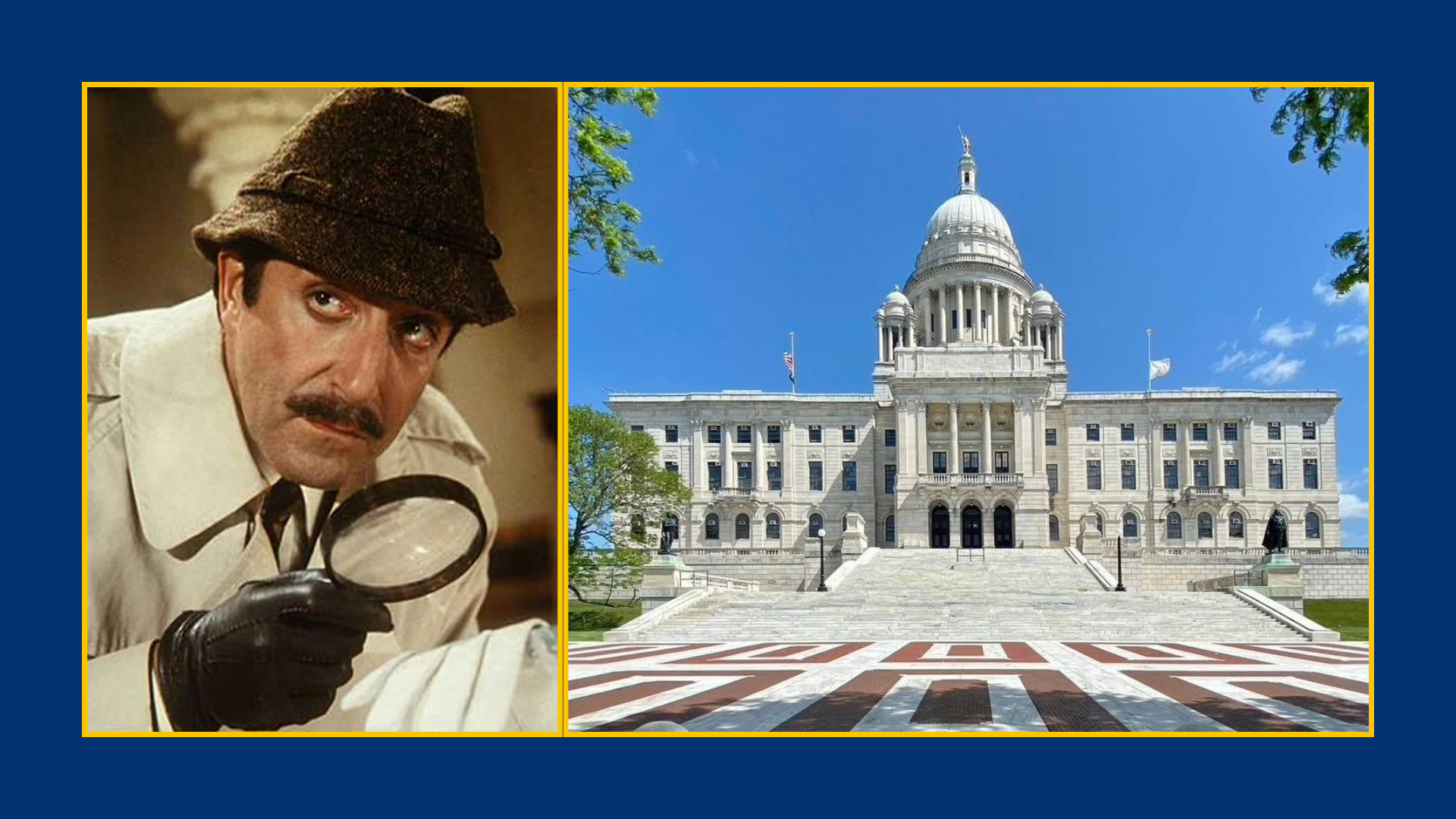
When Rhode Island government wastes your money, who investigates it?
Until now, that hasn't always been an easy question to answer.
If a public official takes a bribe, that's potentially a criminal matter. If an elected official uses public office for personal financial benefit, that may be an Ethics Commission matter, but what if government simply spends millions of dollars badly?
What if a contract is poorly managed, an expensive program doesn't produce the promised results, warnings are ignored or taxpayers keep paying for something that isn't working?
Nobody necessarily stole anything or committed a crime, but taxpayers may still have lost millions.
Rhode Island has now created an office specifically empowered to ask those kinds of questions.
For the first time, Rhode Island will have a statewide Inspector General.
Start With $4.2 Billion
Rhode Island's newly enacted state budget totals approximately $15.2 billion.
About $4.2 billion is appropriated for Medical Assistance, primarily Medicaid. That's more than one-quarter of the entire state budget.
Medicaid is administered through Rhode Island's executive branch, putting its administration within the new Inspector General's jurisdiction, but here's an interesting wrinkle.
Nationally, the federal government pays roughly two-thirds of Medicaid costs. Rhode Island's regular federal matching rate is approximately 58%, although some expenditures receive higher federal matching rates.
That creates an unusual incentive: when a state prevents one dollar of Medicaid waste, the state itself may not save the entire dollar because Washington finances a substantial portion of the expenditure.
That doesn't mean states don't police Medicaid fraud. They do, but it does mean the government administering the program doesn't necessarily bear the full financial cost when money is wasted.
The IG's jurisdiction, however, isn't limited to Rhode Island tax dollars. The law broadly defines public funds to include federal money.
Whether a wasted Medicaid dollar came from Providence or Washington, the question is the same: Was public money properly managed?
Fraud Isn't the Only Issue
Suppose a healthcare provider bills Medicaid for services never provided. That's potential fraud, and existing state and federal agencies can investigate it.
On the other hand, suppose Rhode Island poorly manages a major Medicaid contract, fails to enforce performance requirements or ignores warning signs while costs grow and promised results don't materialize.
Nobody necessarily committed a crime.
That's waste or mismanagement, and that's precisely the space the new Inspector General was designed to examine.
What Can the Inspector General Actually Do?
The new law gives the office jurisdiction across Rhode Island's executive branch.
Its mandate is straightforward: Fraud. Waste. Abuse. Mismanagement.
The IG can receive complaints, initiate investigations, access government records, question witnesses under oath and issue subpoenas.
If someone refuses to comply with a subpoena, the IG can seek enforcement through the Attorney General and Superior Court.
If an investigation uncovers criminal activity, it can be referred to law enforcement, but the IG doesn't need to prove a crime occurred to find a problem.
That's what makes this office different.
Consider Rhode Island's Truck Toll System
RIDOT says approximately $19 million in one-time upgrades will be required to restart Rhode Island's truck tolling system.
The state's 13 tolling gantries began operating in 2018 and collected nearly $104 million before tolling was shut down in 2022 during litigation. RIDOT has since said cameras exceeded their useful lifespan and equipment must be replaced or upgraded.
Whether Rhode Island should toll trucks is a policy question.
That's not for the Inspector General to decide, but an IG could potentially ask:
Why does restarting the system require another $19 million?
What happened to the equipment taxpayers already purchased?
Was that equipment properly maintained?
Was the replacement procurement properly managed?
Are the additional expenditures reasonable and necessary?
Those aren't questions about whether tolls are good policy.
They're questions about how government managed public resources.
Rhode Island has already ordered a separate independent efficiency and performance audit of RIDOT, so the IG would also be expected to coordinate with existing auditors rather than duplicate their work.
Now Consider the Act on Climate
The 2021 Act on Climate established legally enforceable greenhouse-gas reduction targets:
45% below 1990 levels by 2030
80% by 2040
Net-zero emissions by 2050
Rhode Island's 2025 Climate Action Strategy says current policies can keep the state on track for 2030, but additional action will be required to reach the 2040 and 2050 targets.
Could the Inspector General decide those targets are too aggressive?
No.
The General Assembly established them in law, but executive agencies will spend public resources attempting to achieve them. An IG could potentially ask:
What are taxpayers spending?
What results are programs expected to produce?
Are those results being measured?
Are programs delivering the projected results?
Are public resources being efficiently managed?
The Inspector General doesn't decide whether the Act on Climate is good or bad policy.
The office can examine how executive agencies manage public resources while carrying it out.
The IG Doesn't Make Policy
That's the line worth remembering.
The General Assembly writes laws and appropriates money.
The Governor and executive agencies administer those laws and spend much of that money.
The Inspector General examines whether the executive branch is doing so without fraud, waste, abuse or mismanagement.
Can the Inspector General Investigate the Governor?
Potentially, yes.
The law gives the IG jurisdiction over officials, officers, employees and agencies within the executive branch.
The Governor doesn't simply get to choose the Inspector General.
A five-member Independent Advisory Commission screens applicants and provides three finalists. The Governor selects from those candidates and submits the nominee to the Senate for confirmation.
The IG then serves a five-year term, can only be removed for cause, and heads what the law calls an “independent and nonpartisan administrative agency.”
Who Decides What Gets Investigated?
Ultimately, the Inspector General.
The office will receive complaints concerning suspected fraud, waste, abuse and mismanagement.
The Governor can also request a special investigation or management review, but the Governor doesn't control the investigative docket, and filing a complaint doesn't automatically require an investigation.
That's important because a 12-person office could potentially have jurisdiction over billions of dollars in government activity.
Choosing where to focus those limited resources may become one of the first IG's most important decisions.
What About the General Assembly?
The Inspector General cannot investigate the legislative or judicial branches.
Legislative leaders have cited constitutional separation of powers as the reason for limiting the office to the executive branch.
Several other states similarly structure statewide Inspector General offices primarily around executive government, but those branches aren't without oversight.
Rhode Island's Ethics Commission can investigate legislators for conflicts of interest, misuse of office and other ethics violations. It has subpoena power and can impose penalties.
Potential criminal conduct can be investigated by the Attorney General.
Judges are subject to Rhode Island's Commission on Judicial Tenure and Discipline, which can investigate complaints, subpoena witnesses and records and recommend disciplinary action, but there is an important difference.
Rhode Island does not appear to have a watchdog for the legislative or judicial branches with the same broad mandate the new IG will have to investigate noncriminal fraud, waste, abuse and mismanagement throughout the executive branch.
Twelve Employees Overseeing Billions
The FY2027 state budget authorizes 12 full-time positions for the new office, but doesn't specify exactly what those jobs must be.
The Inspector General can establish the organizational structure and hire the personnel and outside expertise necessary.
That raises an obvious question: How do 12 people effectively oversee billions of dollars in government activity?
The answer will likely depend on complaints, risk assessment, coordination with existing watchdogs and the IG's ability to focus on investigations capable of producing meaningful results.
A Five-Year Term, But Not a Five-Year Budget
The initial FY2027 appropriation is approximately $1.3 million for 12 authorized positions.
That budget anticipates roughly half a year of actual operations while Rhode Island selects and confirms the first IG, hires employees and establishes the office, so $1.3 million shouldn't be treated as its normal annual cost.
Future funding will be determined through Rhode Island's annual budget process, and that's where independence gets interesting.
The IG gets a five-year term.
The office doesn't get five years of guaranteed funding.
The law says the General Assembly “shall make adequate appropriations” to allow the IG to operate effectively and independently, but it doesn't guarantee a specific amount.
So the IG has a protected term, removal only for cause, control over investigations and subpoena power.
Its annual funding still depends on the General Assembly, and the General Assembly itself is outside the IG's investigative jurisdiction.
That doesn't mean anything improper is occurring, but it is an important feature of the system when considering exactly what “independent” means.
How Will We Know If It Works?
Creating an Inspector General doesn't automatically eliminate government waste.
The real test will be results.
How many complaints does the office investigate?
What does it find?
Do agencies implement its recommendations?
Does it identify systemic problems?
Does it recover or protect taxpayer money, and is it willing to investigate difficult cases when the evidence warrants it?
Rhode Island is about to give a 12-person office significant authority to examine how billions of dollars move through state government.
That could include a $4.2 billion Medical Assistance program, a $19 million toll-system upgrade, and implementation of major policies such as the Act on Climate.
The Inspector General won't decide what Rhode Island's policies should be.
Its job is to ask a much simpler question: Are executive agencies managing our money the way they should?
