
The Quonset Hut… A Rhode Island Invention That Still Lives On at Bonnet Shores Beach Club
Pearl Harbor Day was less than a week ago, but its significance still lives on today in ways we could never imagine.
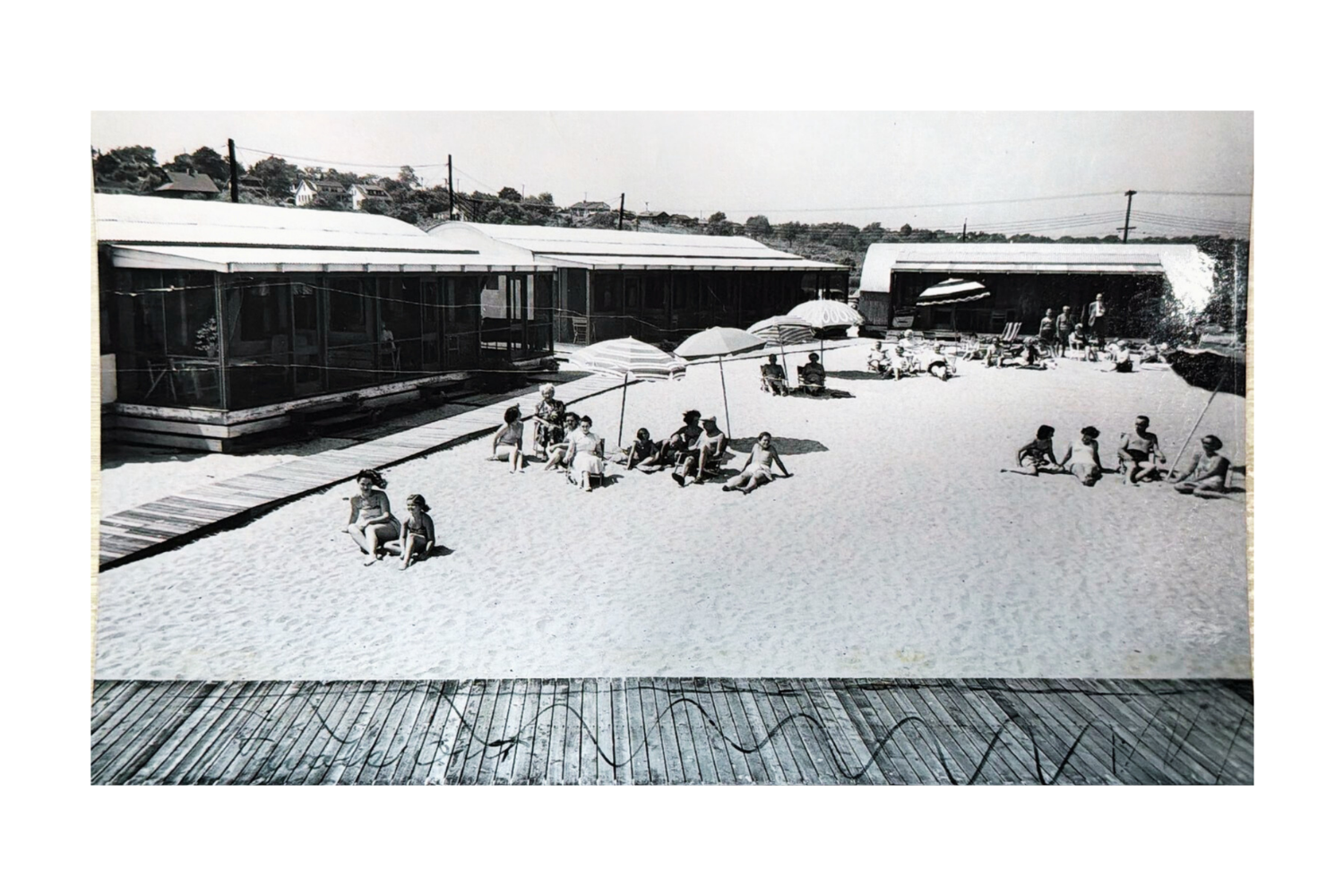
Every summer at the Bonnet Shores Beach Club, thousands of people enjoy the beach, the pool, the Bistro, live entertainment in the Pit, our annual fireworks and the sense of community that makes the place so special, but tucked quietly into our 28-acre property is a little-known piece of Rhode Island and American military history.
It’s also one most members walk by every day without realizing it.
I’m talking about the six “Live-ins,” the only overnight accommodations on the property. Today they look like simple cottage-style units. But their origins?
They started out as Quonset huts.
Yes, the famous Rhode Island–invented structures that helped win World War II once were part of a collection of 46 live-in beach cabanas right here at BSBC.
A Rhode Island Idea Built for a World at War
In 1941, as the United States prepared for a possible global conflict, the U.S. Navy needed a new kind of building, one that could be shipped in pieces, erected quickly by untrained workers, and used anywhere from the South Pacific to the Arctic.
They turned to the George A. Fuller Company, tasking them with designing a portable, durable, prefabricated structure.
The result was the Quonset hut, named for its birthplace at Quonset Point Naval Air Station in North Kingstown.
Its genius was in its simplicity:
A semicircular steel shell
Interlocking corrugated panels
Prefab parts that shipped flat
A structure 10 people could build in a single day
It was so successful that demand exploded, and the Navy contracted Stran-Steel to expand production and improve the design.
By the end of the war, more than 150,000 Quonset huts had been produced, and they were used to shelter soldiers, served as hospitals, workshops, offices, and even chapels.
After the War: New Lives for Old Huts
After WWII, surplus huts were sold off cheaply to the public. Farmers bought them for storage. Schools used them for classrooms. Small businesses turned them into shops and offices.
And some, including the ones that eventually landed at Bonnet Shores Beach Club, were repurposed as staff accommodations.
Long before BSBC evolved into the modern club it is today, seasonal employees lived in hut-style buildings on-site.
Over time, those huts were renovated, rebuilt, and reshaped into the “Live-ins” members recognize now. The curved steel has been replaced, roofs and walls have been modernized, and interiors updated, but the footprint and the purpose remain the same.
When I walk through the property as General Manager, I can’t help but think about how much history is embedded in places we take for granted.
Those Live-in units are more than simple cottages.
They are living artifacts of Rhode Island innovation and American resilience.
A Full-Circle Moment for Quonset Point and District 36
It’s fitting that this story loops back to our own district.
Quonset huts were born just a few miles from BSBC at Quonset Point.
Today, that same area is home to one of the state’s strongest economic engines: Quonset Business Park, supporting over 14,000 jobs and powering Rhode Island’s modern economy.
From wartime invention to postwar repurposing to becoming a quiet but meaningful part of the Bonnet Shores Beach Club’s history, the Quonset hut continues to leave its mark on our community.
Sometimes the best history lesson is waiting right in your own backyard, or in this case, due east of the volleyball nets.
