
A 6–7 Budget: A Mid-Year Check-In on Rhode Island’s FY2026 Finances
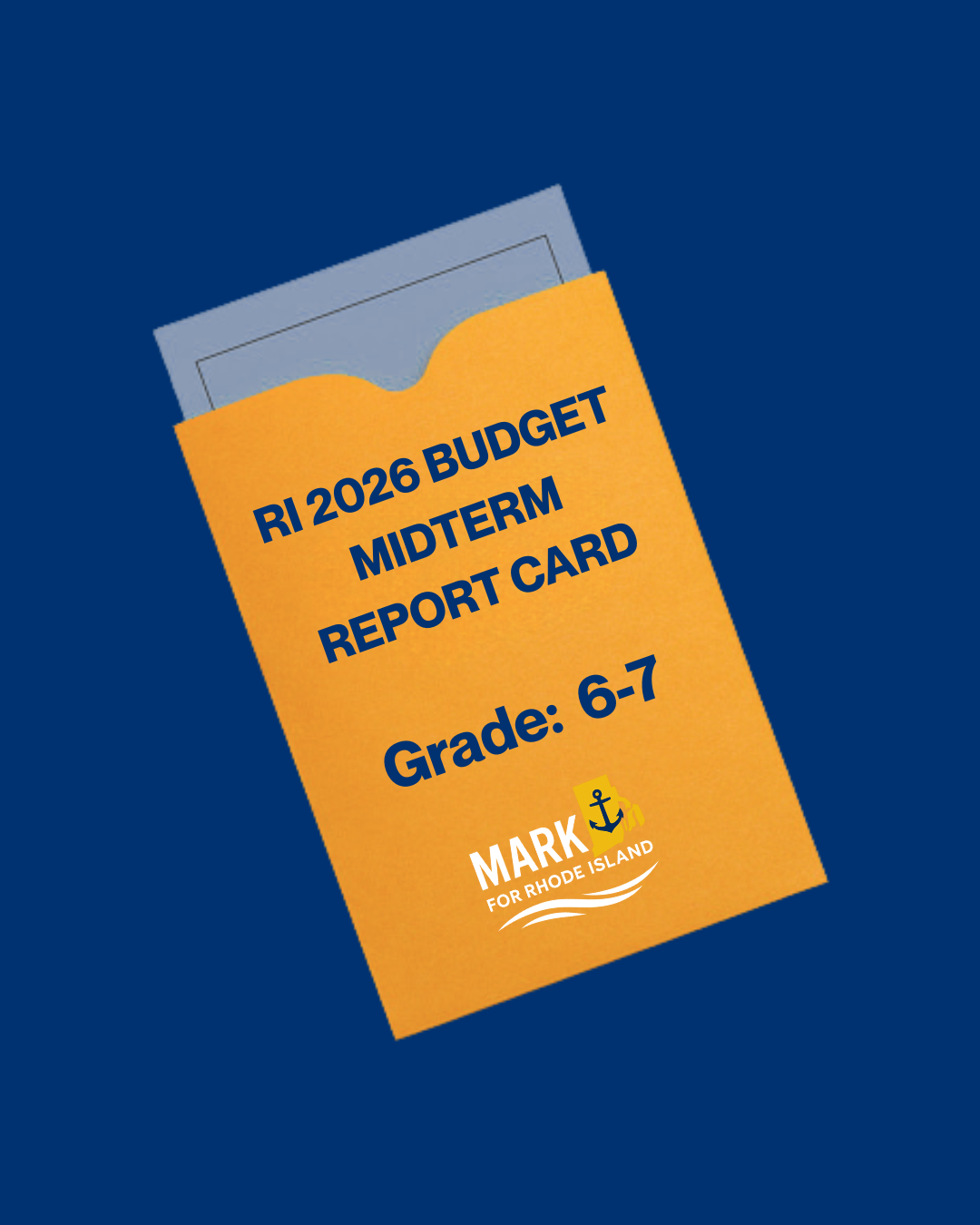
There’s a phrase you hear a lot these days. “It’s a 6–7.”
Not terrible. Not impressive. Just… fine.
Six months into Rhode Island’s FY2026 budget, that phrase feels uncomfortably accurate.
This isn’t about politics or personalities. It’s about checking the scoreboard halfway through the game and being honest about what the numbers are telling us.
First, a quick clarification (because it matters)
Rhode Island does not operate on a calendar-year budget.
FY2026 runs from July 1, 2025 to June 30, 2026
We are now roughly halfway through the fiscal year
This budget is no longer proposed
It is adopted, enacted, and actively being executed
That distinction is important. What we’re evaluating now isn’t theory or projections. It’s performance.
What a “6–7” budget really means
In everyday shorthand, a 6–7 usually means:
The intentions are good
The effort is real
The basics are covered
But the result isn’t exceptional
A 6–7 doesn’t fail, but it doesn’t inspire confidence either.
That’s an acceptable grade for a movie or a restaurant.
It’s harder to accept when we’re talking about a $14+ billion state budget that affects every household and business in Rhode Island.
Where the FY2026 budget earns its 6–7
To be fair, there are real positives:
Core state services continue to operate
No immediate fiscal crisis
Existing commitments are largely maintained
The system hasn’t broken
Stability matters, so this is not a disaster budget.
Why it doesn’t score higher
About six months into FY2026, the state is facing an estimated $300 million structural gap.
At this point, that gap is no longer hypothetical.
The FY2026 budget uses one-time surplus funds and non-recurring revenue offsets to help balance current spending, and these sources aren’t dependable year-to-year.
As a result, they contribute to future gaps as they phase out.
Other concerns include:
Revenue assumptions embedded in the budget have not materialized as expected.
Cost growth is accelerating faster than income growth.
Future obligations that remain underfunded
Very little margin for error if economic conditions soften
A budget that relies on best-case assumptions doesn’t earn an 8 or a 9. It earns a 6–7.
Why this matters to real people
When the budget comes up short, families don’t get a “mid-year adjustment.”
They feel it through:
Higher fees or taxes
Rising energy and utility costs
Reduced flexibility when new needs arise
Fewer options when the next downturn hits
Structural gaps don’t stay in the State House. They eventually trickle down to the rest of us.
The bottom line
A 6–7 budget isn’t a failure, but it also isn’t something to celebrate, especially when the data halfway through the fiscal year tells us the margin for error is shrinking.
Good government isn’t about perfection.
It is about honesty and about revisiting assumptions when the facts change.
