
More Insanity?
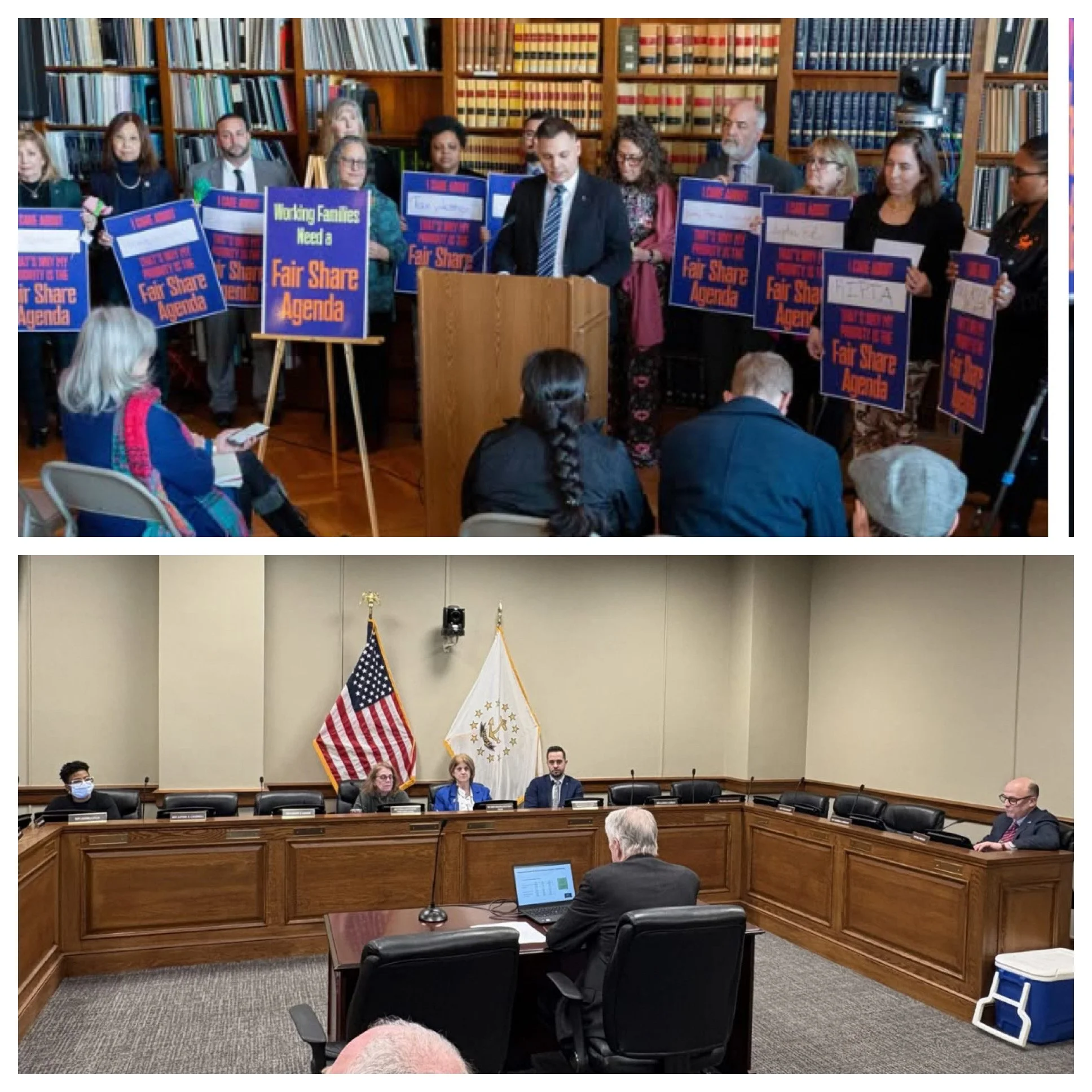
Yesterday, two very different things happened at the State House.
On one floor, a well-organized group of lawmakers stood shoulder to shoulder alongside advocacy organizations to announce the “Fair Share for Rhode Island” agenda.
The room was full. The signs were professionally printed, and the message was clear: raise taxes on top earners to fund critical services and protect Rhode Island from potential federal cuts.
On another floor, at nearly the same time, the House Committee on Small Business convened to hear a presentation on Rhode Island’s business climate, an issue directly tied to jobs, wages, opportunity, and long-term state revenue.
That room was nearly empty.
The contrast was striking.
And it raises an important question: Why does helping people so often get framed as being at odds with growing opportunity?
This Debate Isn’t New
According to reporting from the Providence Journal, you can go all the way back to May 21, 1992 to find one of the first newspaper accounts of what has now become a decades-long campaign to raise income tax rates on Rhode Island’s top earners.
That means for more than 30 years, variations of this same idea have resurfaced, often under different names, with different thresholds, but with a familiar core argument: if we just extract more from those at the top, we can solve our challenges.
Which leads to an honest and necessary question:
Wouldn’t it have been more helpful, and more productive, if we had spent the last 34 years focused on how to help everyone improve their lot in life, instead of repeatedly returning to how to take more from a smaller group of people?
That’s not a rhetorical question. It’s a reflection worth sitting with.
What the Public Is Saying Matters
What stood out to me wasn’t just the difference in attendance. It was the reaction from the public in the comments on the post.
Despite the packed room and coordinated messaging around the Fair Share announcement, the online response was overwhelmingly negative.
Comment after comment raised familiar concerns:
“We need to spend less, not tax more.”
“Rhode Island already ranks near the bottom for business competitiveness.”
“The people who can afford it will leave.”
“What does ‘fair share’ actually mean?”
These aren’t fringe opinions.
They’re questions from people who want Rhode Island to succeed and who are worried we’re stuck in the same loop we’ve been in for decades.
Ignoring those concerns doesn’t make them disappear.
Helping People and Growing the Economy Are Not Opposites
Rhode Island absolutely needs strong public education, accessible healthcare, affordable childcare, and reliable infrastructure. Those are real needs, and they deserve serious attention.
But here’s the part we don’t talk about enough: Those things aren’t sustainably funded without a healthy, growing economy.
Small businesses, entrepreneurs, and employers aren’t abstract concepts. They’re our neighbors.
They’re the people creating jobs, taking risks, and building the tax base that supports public services in the first place.
When conversations about raising taxes consistently draw packed rooms and conversations about business climate, competitiveness, and job creation draw empty ones, it sends a signal.
Not just to business owners, but to anyone deciding where to build a future.
This Shouldn’t Be an Either/Or Debate
The real question isn’t whether we should help working families.
The question is why we struggle to talk seriously, and with the same energy, about how we create opportunity while doing so.
Why can’t we:
Invest in critical services and demand accountability for results?
Focus on upward mobility before defaulting to redistribution?
Make Rhode Island more competitive while protecting our most vulnerable?
Progress isn’t choosing sides. It’s doing the harder work of balance.
Leadership Means Looking Forward, Not Repeating the Past
If we’ve been debating versions of the same tax proposal since 1992, it’s fair to ask whether repetition alone will produce a different outcome.
Is this another example of doing the same things over and over again and expecting a different outcome?
Ordinary Rhode Islanders don’t care about catchy slogans and colorful signs. ‘
They are smart enough to know that real opportunity begins with leaders willing to show up for all of them.
Helping people doesn’t have to come at the expense of others, and caring about business doesn’t mean you don’t care about families.
If we want Rhode Island to move forward, we should be willing to ask a simple question… why can’t we do both?
