
Rhode Island’s Climate Goals: What We’re Doing Right and Where the Math Isn’t Adding Up
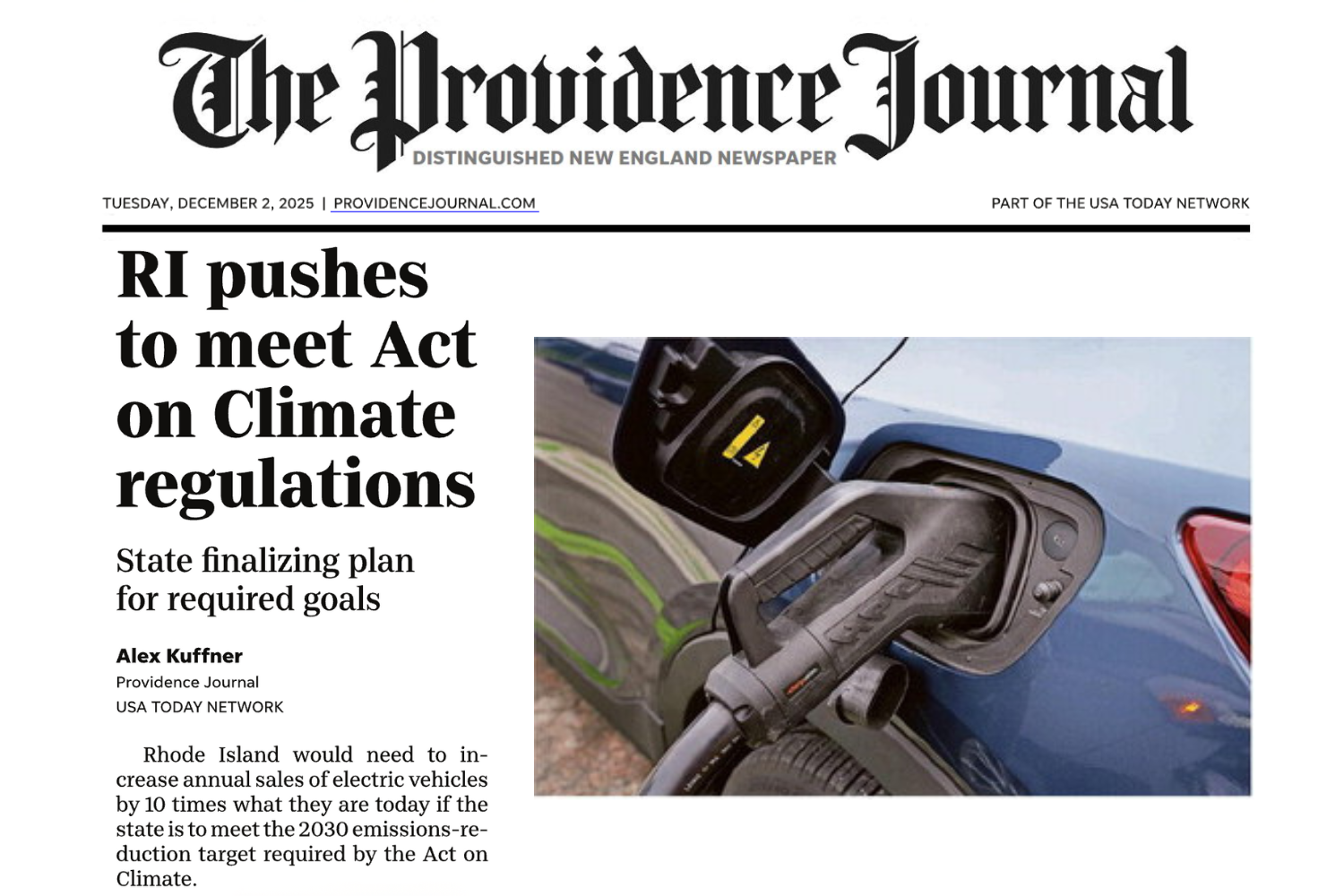
A front-page story in December 2nd’s Providence Journal lays out something every Rhode Islander deserves to understand clearly: the next five years will determine whether our state can meet the 2030 emissions-reduction target set out in the Act on Climate, or whether we need a dose of realism to protect families and businesses from unaffordable expectations.
Here’s the good news: Rhode Island is doing a lot of things right, and here’s the challenge: the numbers don’t match the targets, and the federal landscape has shifted beneath our feet.
As someone who believes in practical problem-solving, responsible budgeting, and protecting working families, I want to break down what’s happening, what we can do, and whether the plan as written is realistic.
What Rhode Island Is Actually Doing Well…
1. We have a plan, and it’s enforceable.
Rhode Island is ahead of most states because we do have a legally binding climate law and a roadmap to get there. That’s not nothing. It means we’re planning, measuring, and adjusting rather than improvising, so that’s good for us.
2. We’ve already made measurable progress.
RI emissions are about 19.5% below 1990 levels which is better than many states and ahead of our older 2020 goal. Building emissions have dropped, heating systems are getting cleaner, and efficiency programs continue to save people money.
3. Heat pump incentives are working.
The Clean Heat RI program has helped thousands of households transition away from oil. And a new $450 million New England heat pump program will bring millions in rebates and workforce training to Rhode Island.
Heat pumps can dramatically reduce bills for oil-heated homes, and the state is rightly targeting those opportunities.
4. EV incentives and standards are in place.
Like it or not, we have rebates on the books, programs to expand charging, and standards designed to increase the number of electric vehicles available for sale. This is the infrastructure needed for long-term progress.
5. Our electricity is getting cleaner.
Rhode Island is on track toward a 100% renewable electricity standard by 2033, which is vital if we’re going to electrify cars and heating without shifting emissions elsewhere.
Where We Are Struggling and Why…
1. Emissions are rising again.
In 2023, emissions went up by 1.4%, driven mostly by transportation. More miles driven, more pollution. Traffic anyone?
We are at a plateau when we need a steep decline.
2. Transportation is the biggest obstacle.
To hit the 2030 targets, Rhode Island would need to:
Increase EV sales tenfold, and
Increase heat pump sales fivefold,
All within the next five years.
Those numbers are enormous. And as the ProJo story pointed out, the federal government is no longer backing these transitions the way it was even two years ago.
3. Federal support is no longer guaranteed.
The new administration in Washington has already begun reversing clean-energy funding, EV support, solar incentives, and rules requiring more EVs on dealer lots.
Our state climate director, Terry Gray, said it plainly: We can’t meet the law’s targets without adjusting the plan.
4. The long-term goals look even harder.
Rhode Island’s own modeling shows the state likely falling short of the 2040 and 2050 benchmarks unless new technology comes along or unless costs decrease significantly.
The electricity grid alone would need to handle 57% more demand than our current trajectory.
That requires billions in infrastructure investment.
Is the Plan Realistic?
Short answer: The goals are technically possible but financially and logistically unrealistic under current conditions.
That doesn’t mean we abandon them. It means we acknowledge reality and adapt.
The climate strategy acknowledges:
Federal support has changed.
Current policies will not get us to the 2040/2050 goals.
Affordability is a major concern.
Rhode Island must “adjust” its path.
This isn’t politics. It’s basic math.
What Will This Cost Rhode Islanders?
The state has not published a single price tag, but we can break the cost into three buckets:
1. Upfront household costs
Heat pumps: $8,000–$20,000 installations
Home electrical upgrades
EVs still carry a higher sticker price
Higher demand on the electric grid means higher rates unless managed properly
Even with rebates, these are big out-of-pocket costs for many families.
2. State budget costs
If federal dollars shrink, the state must either:
Increase state subsidies
Increase utility charges
Increase taxes
Reduce spending in other areas
Or take on more debt
None of these choices are painless.
3. Long-term savings
To be fair, climate benefits do save money over time through:
Lower heating oil use
Lower EV maintenance costs
Cleaner air (less asthma, especially in Providence which has one of the highest asthma rates in the nation)
Reduced climate damage
But families still need to get through the expensive early years.
Can Rhode Island Afford This Without Major Subsidies?
No, not if we want to hit 2030 as written.
Without subsidies:
Only wealthier households will electrify.
EV adoption will crawl.
Utility bills will climb because the grid must be upgraded anyway.
Targets will be missed.
With subsidies:
The state will either raise taxes, cut other priorities, or add debt.
We must find the practical middle ground.
So What Should Rhode Island Do?
Here are pragmatic, cost-conscious recommendations that protect both climate progress and household budgets:
1. Target the cheapest emissions cuts first.
Focus heat pump rebates on oil-heated homes, where the payback is fastest.
Focus EV programs on high-mileage drivers, delivery fleets, and municipal fleets, where each vehicle cuts more emissions.
2. Use smarter financing instead of endless subsidies.
Expand on-bill financing so families can pay for heat pumps over time.
Use green-bank models to attract private investment instead of relying on taxes.
Scale up low-interest loans for home electrification.
3. Fix bottlenecks: permitting, workforce, and the grid.
Streamline local permitting for heat pumps, EV chargers, and solar.
Train more electricians and HVAC workers.
Require utilities to plan grid upgrades proactively, not reactively.
4. Reduce driving where possible.
Every mile not driven is a mile we don’t need to electrify.
This means supporting:
Better transit
Walkable communities
Employer commute programs
Bike infrastructure where it works
5. Revisit the timeline, not the goal.
We should keep net-zero by 2050 as the long-term destination, but the 2030 and 2040 checkpoints should be revisited to reflect:
The changed federal landscape
The financial strain on households
The workforce and infrastructure realities
That’s not “giving up”. It’s honest, responsible governance.
Conclusion: We Need Ambition, But We Also Need Honesty
Rhode Island can, and should, take real steps toward a cleaner future, but we can’t pretend that a tenfold increase in EV sales and a fivefold increase in heat pump sales will magically happen in five years without enough funding, without strong federal alignment, and without a realistic plan for affordability.
This isn’t about left or right.
It’s about math, planning, and protecting working families.
We need a climate strategy that:
Reduces emissions
Protects ratepayers
Supports businesses
Attracts federal and private dollars
And adjusts goals when the facts require it
That’s the kind of practical, common-sense approach Rhode Island deserves.
