
One of the most common things I hear while campaigning is: "I don't get involved in politics."
Most people say it almost as a badge of honor, and to be fair, I understand why.
People are busy. They're raising families, building careers, paying mortgages, caring for aging parents, and trying to make ends meet.
Politics can feel exhausting, divisive, and disconnected from everyday life, but there is a problem with sitting on the sidelines.
Whether we choose to participate or not, government decisions still affect our lives every day.
They affect our taxes.
They affect our energy bills.
They affect our healthcare costs.
They affect our schools, roads, housing, and local businesses.
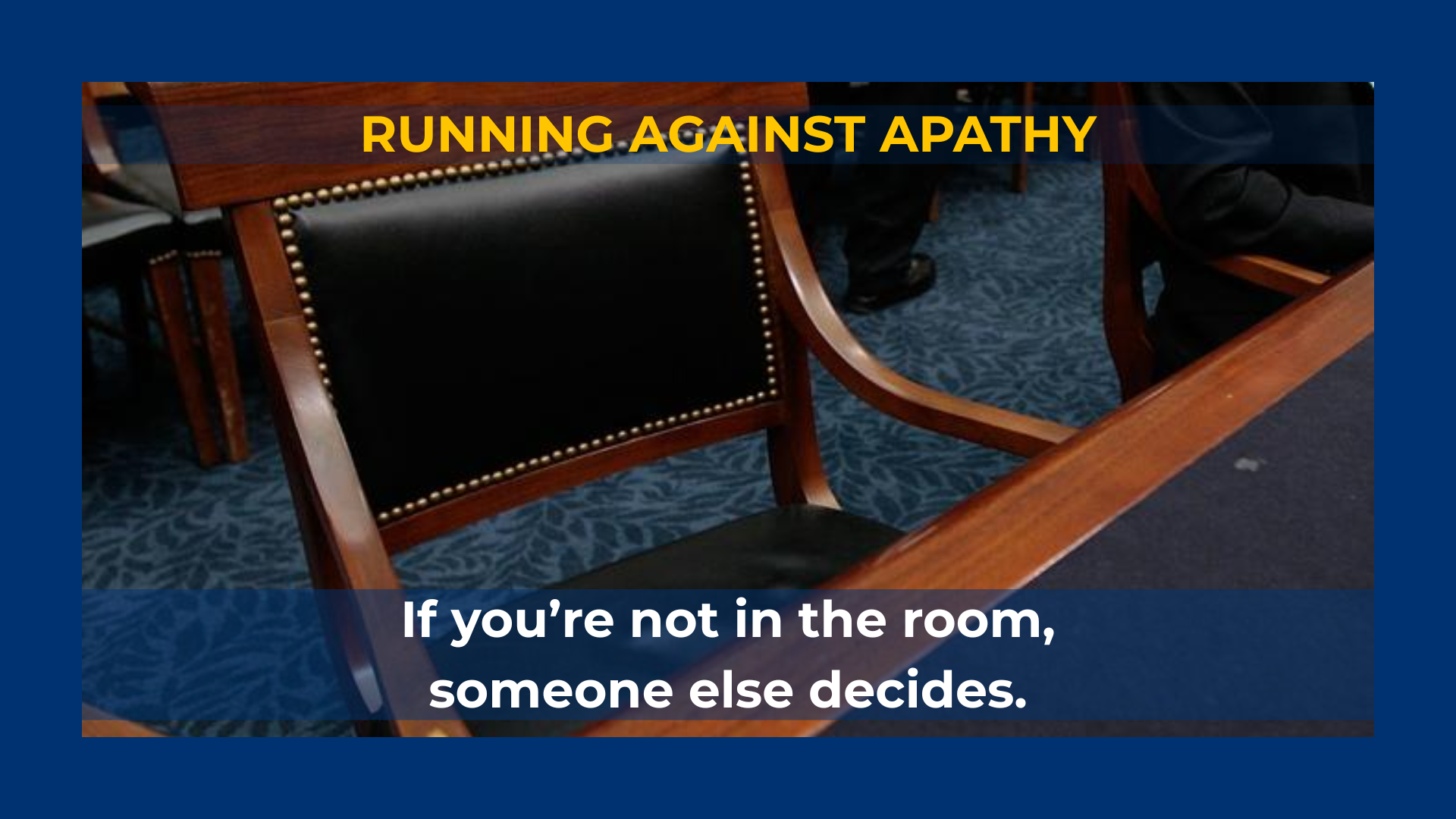
The reality is that opting out doesn't stop those decisions from being made. It simply means someone else makes them.
What's interesting is that many of the people who tell me they don't get involved in politics often have strong opinions about where Rhode Island is headed.
In private conversations, they talk about affordability.
They talk about taxes.
They talk about the cost of housing.
They talk about healthcare.
They talk about opportunities for their children and grandchildren.
They care deeply about these issues, but caring privately and participating publicly are two different things.
The good news is that getting involved doesn't require a major commitment.
You don't have to run for office.
You don't have to spend every weekend knocking on doors.
Getting involved can be as simple as:
Voting in a primary election.
Attending a campaign event.
Hosting a small meet-and-greet with friends and neighbors.
Putting a yard sign on your lawn.
Volunteering for an hour or two.
Making a small donation to support a candidate who shares your values.
Small actions add up.
In fact, most campaigns are built on dozens or hundreds of people doing small things rather than a few people doing everything.
Democracy isn't a spectator sport.
The people who show up shape the future.
The people who participate influence the conversation.
The people who get involved help determine the direction of their community.
I'm running for State Senate because I believe Rhode Island can do better, but one candidate can't change the direction of a state alone.
Real change requires people who care enough to participate.
If you've ever found yourself frustrated by the direction of our state, consider taking one small step.
Not because politics deserves your attention, but because your future deserves your participation.
I'm running against apathy, and I'd be honored to have you join me.
