
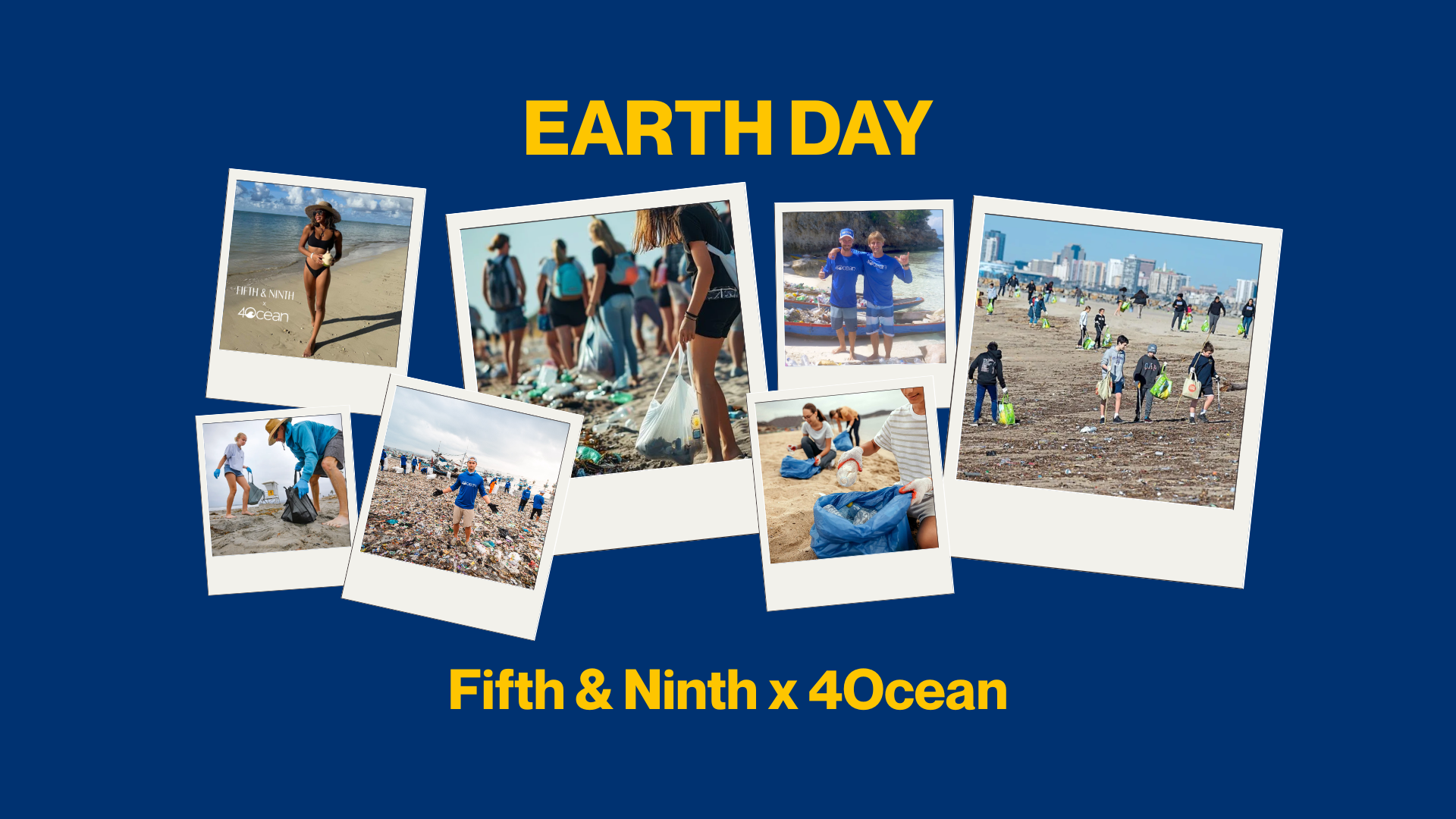
4,181 lbs of plastic removed = 83,620 plastic bottles
April 22nd is Earth Day.
We’ll hear a lot about cleaner oceans, lower emissions, and protecting the environment.
That all matters, but here’s the question we don’t ask often enough: What’s actually working?
From Intention to Results
Good intentions are easy. Good results are not.
At our company, Fifth & Ninth, we believe in giving back, so we partnered with 4ocean, a for-profit certified B Corporation which focuses on ocean and shoreline cleanups, to take a small step in that direction.
We tie purchases to actual environmental cleanup, not just awareness or messaging.
It’s the actual removal of plastic from oceans, rivers, and coastlines.
Oh, and more importantly, it’s tracked and verified.
What That Looks Like
So far, that partnership has helped remove:
4,181 pounds of plastic
Equivalent to 83,620 plastic bottles
That’s not a projection. It’s not a goal.
It’s an actual result verified through Ecodrive, a platform that tracks environmental impact tied directly to purchases.
Why This Matters on Earth Day
Earth Day is about raising awareness, but awareness alone doesn’t solve problems.
Progress comes from action and from being able to measure whether that action is making a difference.
That’s where the conversation needs to go next.
Where Policy Comes In
Rhode Island’s Act on Climate sets some of the most ambitious emissions reduction goals in the country, including net-zero greenhouse gas emissions by 2050, and that matters.
Setting targets is important, but goals alone aren’t enough.
In fact, the state’s own oversight body, the Rhode Island Executive Climate Change Coordinating Council, has acknowledged that we are not currently on track to meet those goals.
That’s not a political talking point. It’s coming from the people responsible for implementing the plan, and that’s exactly why this conversation matters.
If we’re not on track, then the question isn’t whether the goals are right.
It’s whether the approach is working and what needs to change.
A Broader View of Solutions
There’s an ongoing conversation about how best to drive environmental progress.
Some believe that, left unchecked, corporations won’t always do the right thing when it comes to protecting our land, air, and water and that government has a responsibility to step in and make systems work for people.
There’s some truth in that. Government has an important role to play, but that’s not the full picture.
Across the country, and right here in Rhode Island, many businesses like ours are already taking meaningful steps to reduce waste, improve efficiency, and invest in cleaner practices.
In our case, partnering with 4ocean has led to over 4,000 pounds of plastic removed, tracked and verified.
No mandate. No requirement.
Just a decision to act.
The Cost Side of the Conversation
There’s another piece to this that people feel every month. It’s energy costs.
Rhode Islanders are paying some of the highest utility bills in the country, and a big part of that is tied to how we’re approaching energy and climate policy.
Investing in cleaner energy is important, but if we’re asking families and small businesses to absorb higher costs, we should be able to clearly show what we’re getting in return.
Are emissions meaningfully down?
Which policies are working?
Where is the progress?
Those answers should be clear and easy to understand.
Raising the Standard
At Fifth & Ninth, our partnership with 4ocean ties real dollars to real outcomes.
You can see it. You can measure it. You can track it over time.
That should be the standard, not the exception.
If a small business can measure its environmental impact down to the pound, we should expect that same level of clarity and accountability from public policy.
Especially when those policies come with real costs to taxpayers and ratepayers.
A Rhode Island Perspective
Here in District 36, this matters.
We live in a coastal community.
Our economy, our environment, and our quality of life are all connected to clean water and responsible stewardship.
Protecting that matters, but so does making sure the solutions we invest in are actually delivering results.
A Better Question for Earth Day
This Earth Day, instead of just asking what we support, let’s also ask how we measure progress.
Government has an important role to play, but it doesn’t have a monopoly on solutions.
If we’re serious about protecting our environment, we should be open to ideas that work and willing to adjust when they don’t.
