
Rhode Island just lost 1,000 jobs in the February Jobs Report from the RI Department of Labor & Training.
Unemployment ticked up to 4.6%, and over the past year, there are fewer Rhode Islanders working today than there were a year ago.
These aren’t isolated data points. They’re signals.
What the Latest Numbers Show
According to the Rhode Island Department of Labor and Training, the most recent labor market report shows:
Jobs at Rhode Island businesses down 1,000 in February
Unemployment up to 4.6%
Over the past year:
1,800 fewer jobs
6,200 fewer employed residents
At the same time, the national unemployment rate sits lower, at roughly 4.4%.
We’re not just standing still. We’re starting to drift in the wrong direction.
What Economists Are Seeing
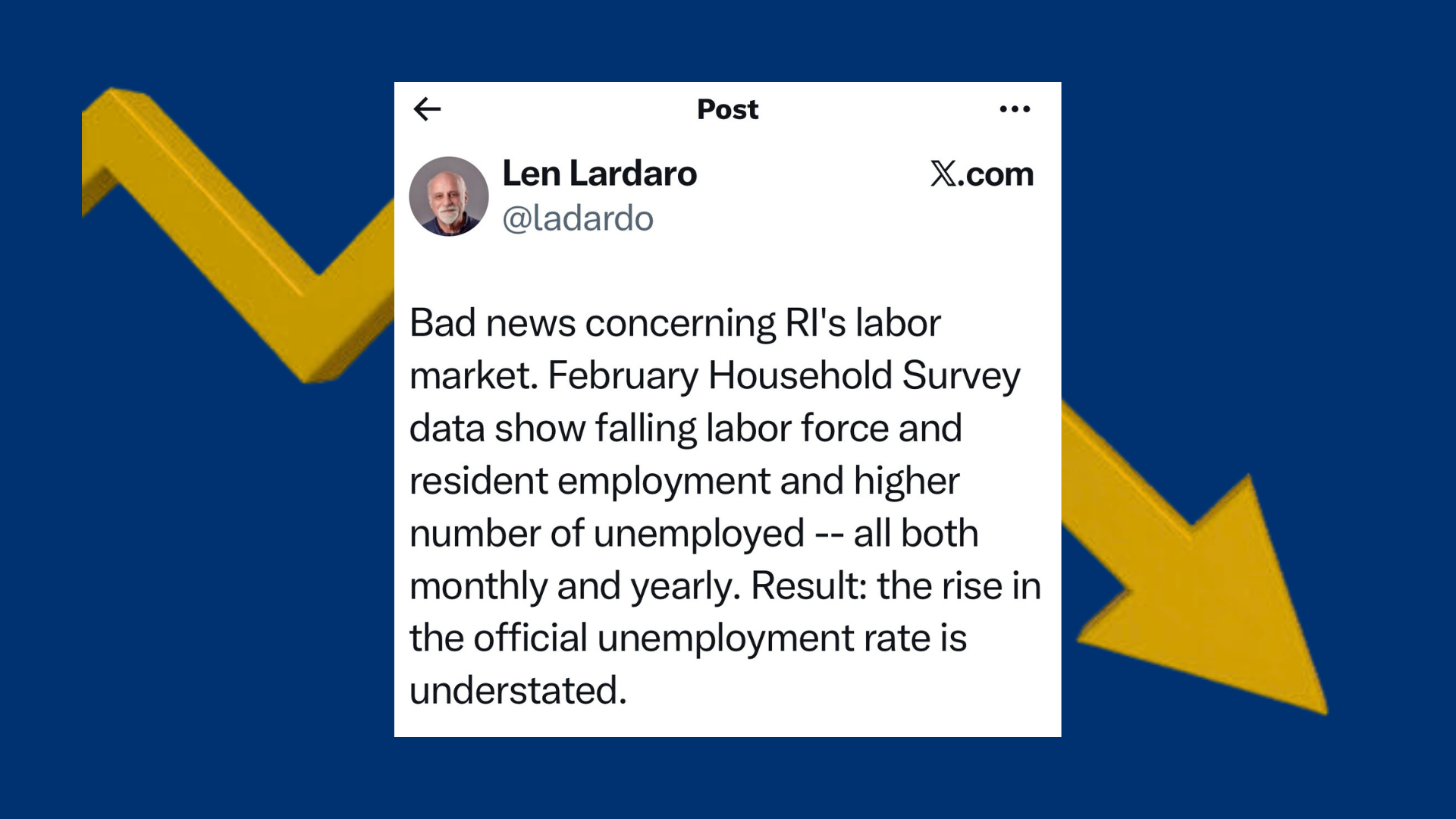
Len Lardaro, one of Rhode Island’s most respected economists, has pointed to a deeper concern behind the headline numbers.
The labor force is shrinking. Fewer people are working, and the number of unemployed is rising, both month to month and year over year.
His takeaway is simple but important: The unemployment rate may actually be understating the weakness in Rhode Island’s labor market.
When people leave the labor force altogether, they’re no longer counted as unemployed.
Trend or One Bad Month?
No one expects the numbers to be perfect every month.
But context matters.
December was relatively stable
January showed early signs of softening
February confirmed movement in the wrong direction
When multiple indicators all move the same way, jobs down, employment down, labor force down, and unemployment up, it’s not just noise.
It starts to look like a trend.
Where Are the Losses Coming From?
Rhode Island’s monthly job changes are often driven by a handful of sectors, particularly hospitality, retail, and construction, which tend to be more sensitive to economic conditions.
That means some month-to-month movement can be volatile, but when broader indicators like total employment, labor force participation, and unemployment all move in the wrong direction at the same time, it points to something more than just sector-specific swings.
What About National Factors?
There’s a lot happening right now on the national stage including: tariffs, rising energy costs, and global instability.
All of that puts pressure on the economy and can make businesses more cautious about hiring.
But here’s the part we shouldn’t ignore: Rhode Island’s job numbers were already starting to slip before those factors fully took hold.
What This Means for Rhode Island
This isn’t just about statistics.
If the job losses are coming from sectors like hospitality and retail, those are the sectors most exposed to labor cost increases which means policy changes carry more weight, especially in a softer economy.
It shows up in real life:
Fewer opportunities for young people entering the workforce
More pressure on small businesses trying to grow
Slower momentum across the state’s economy
And over time, fewer people working means less opportunity overall.
The Bigger Question
We can’t control global policy, but we can control how competitive Rhode Island is.
For businesses deciding where to invest.
For workers deciding where to build a future.
And for young people deciding whether to stay or leave.
Competitiveness isn’t one policy.
It’s everything from energy costs, to housing, to how easy it is to start and grow a business here.
